 NY:
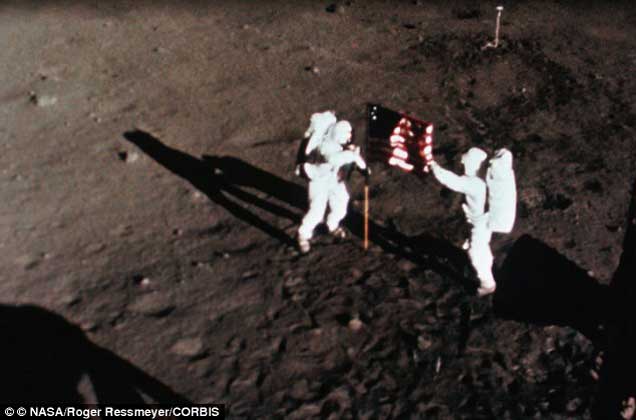
NY: Amid the triumphant success of Neil Armstrong and Buzz Aldrin's successful moon-walk in July 1969, NASA and President Richard Nixon's White House breathed a heavy sigh of relief that he didn't have to deliver a speech to the nation entitled 'In Event of Moon Disaster'.
The speech and a memo were prepared in the event that the two Apollo 11 astronauts did not manage to reconnect with their command module piloted by Michael Collins and could not return safely home to Earth.
The memo laid out a list of instructions for President Nixon, among which was the tragic task of calling the 'widows-to-be' to express condolences and then to deliver a moving and thoughtful speech to the United States and ultimately the watching world.
The memo was drafted by Nixon's chief of Staff, H.R. Haldeman and the speech by Wailliam Safire who went on to work for the New York Times.
Once the two astronaut's families had been informed, NASA would ask the men to 'close down communications', which meant they would be left to die slowly in space or to take their own lives.
The minute that Mission Control in Houston had ceased communications, a clergyman was to commend their souls to 'the deepest of the deep' in the manner of a burial at sea.
President Nixon would then have delivered the speech he thankfully never did beginning: 'Fate has ordained that the men who went to the moon to explore in peace will stay on the moon to rest in peace.'
These brave men, Neil Armstrong and Buzz Aldrin, know there is no hope for their recovery.'
The speech would have finished with a flourish designed to evoke the First World War poetry of Rupert Brooke, who wrote:
'If I should Die, think only this of me:
'That there's some corner of a foreign field
'That is forever England.'